Hello world of Digital Humanities, or wait, is it Digital History?
The world of WP welcomed me with a fog of confusion and frustration, but I think the dust of the first night of class has settled. Minus a few technical difficulties, and scrolling through a million theme options, at least this blog page is up and ready to share thoughts and insights for our Clio Wired journey.
So who was I to think by doing “New Social History” that I was avoiding the digital world? I thought by keeping to myself, not doing fancy websites, nothing more than crunching numbers, spreadsheets, and well, maybe a little QGIS, I was safe. Adam Crymble’s Technology and the Historian blew my mind. Of course, I had heard of Frank Owsley’s thesis of a small poor/middling class in between the enslaved and elite, but I never attributed his methodology as a foundation for digital history. Regardless if his “computer” was just a really smart person that was good with numbers or a calculator, I guess I was blinded by his racist motivations. (18)
I think Crymble’s glossary is one of his most important contributions. As a historian in training, defining my methodology has been one of the biggest challenges that haunts me. Although I am still not completely certain of exactly what I am doing all the time, this week’s reading pushed me one step closer to that conclusion. Even the different types of transcription projects that I engage in have their own names.
Although almost any scholar can employ the differing regional experiences argument, Crymble’s point about these different paths toward the digital world as we currently know it is interesting to think about. I would consider us fortunate even if the focus that pushed the US was pedagogy instead of digitizing records. Often, I pause in amazement at the local Fairfax County historical work on our reference shelves that my predecessors pumped out, without the benefits of VirginiaChronicle.com. I prefer to focus on other aspects of the history world besides pedagogical approaches, but last week I did have the opportunity to facilitate three breakout sessions of the Fairfax County Public School Social Studies teacher in-service day. Even the resources available to these students dwarfs what I had back in Maine, so while Crymble focuses on a macro scale, I think we need to be aware of the differences within those big spaces.
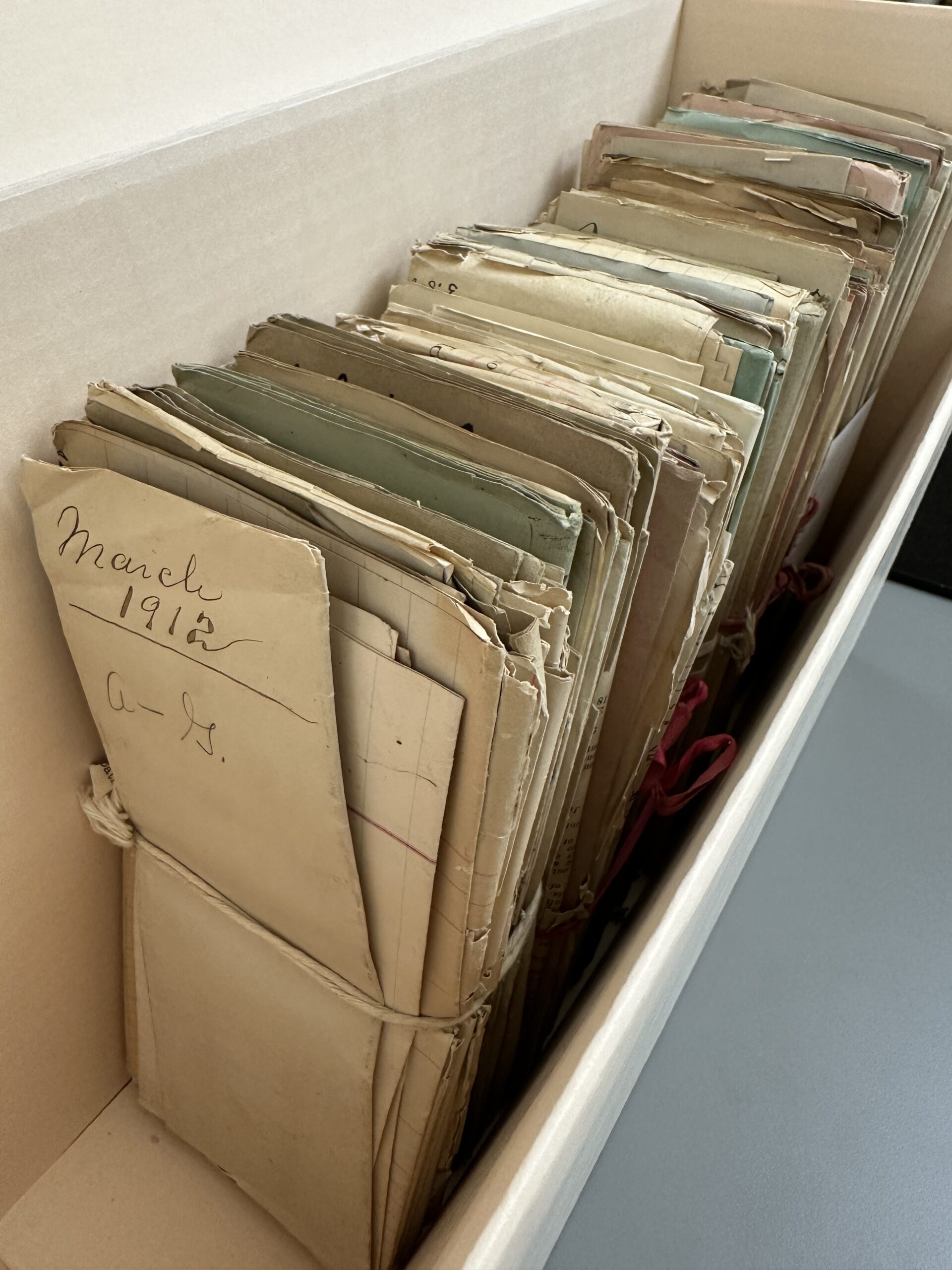
Working in the Fairfax Circuit Court Archives for over the past year and a half has been a playground for “cliometrics.” Most of our collection is digitized, but not out there on the internet. Ancestry and FamilySearch have scooped up some of our will and deed books, but overall, we are an institution that requires patrons to come in the flesh. Trying to use these records in a new way, I have created data sets from Fairfax’s slave patrol and jailer records that have led to visualizations which have furthered my arguments. I also mapped the County’s slave patrols, rudimentarily, using QGIS. I did not think that by doing all of this I was, in fact, engaging in digital history.
In closing my first ever blog post, it was great to meet all of you fellow budding digital historians and I look forward to forging onward together this semester.
This is a great time to get involved with cliometrics. Not only are there many new digital sources, but the cost of processing them is also decreasing exponentially. With the growth in data analytics, new tools can be imported from adjacent fields, everything from LLMs to new ways to sort and categorize unstructured data.
Andrew,
Your point about Crymble’s glossary being one of his most important contributions is significant. In a work such as this, which analyzes the contributions of different institutions and their role in pioneering digital scholarship, a thoroughly composed index and glossary greatly increases the accessibility of the work and its concepts to audiences. Historians should always prioritize these sections, which allow for a certain level of added ease when one goes about their work.